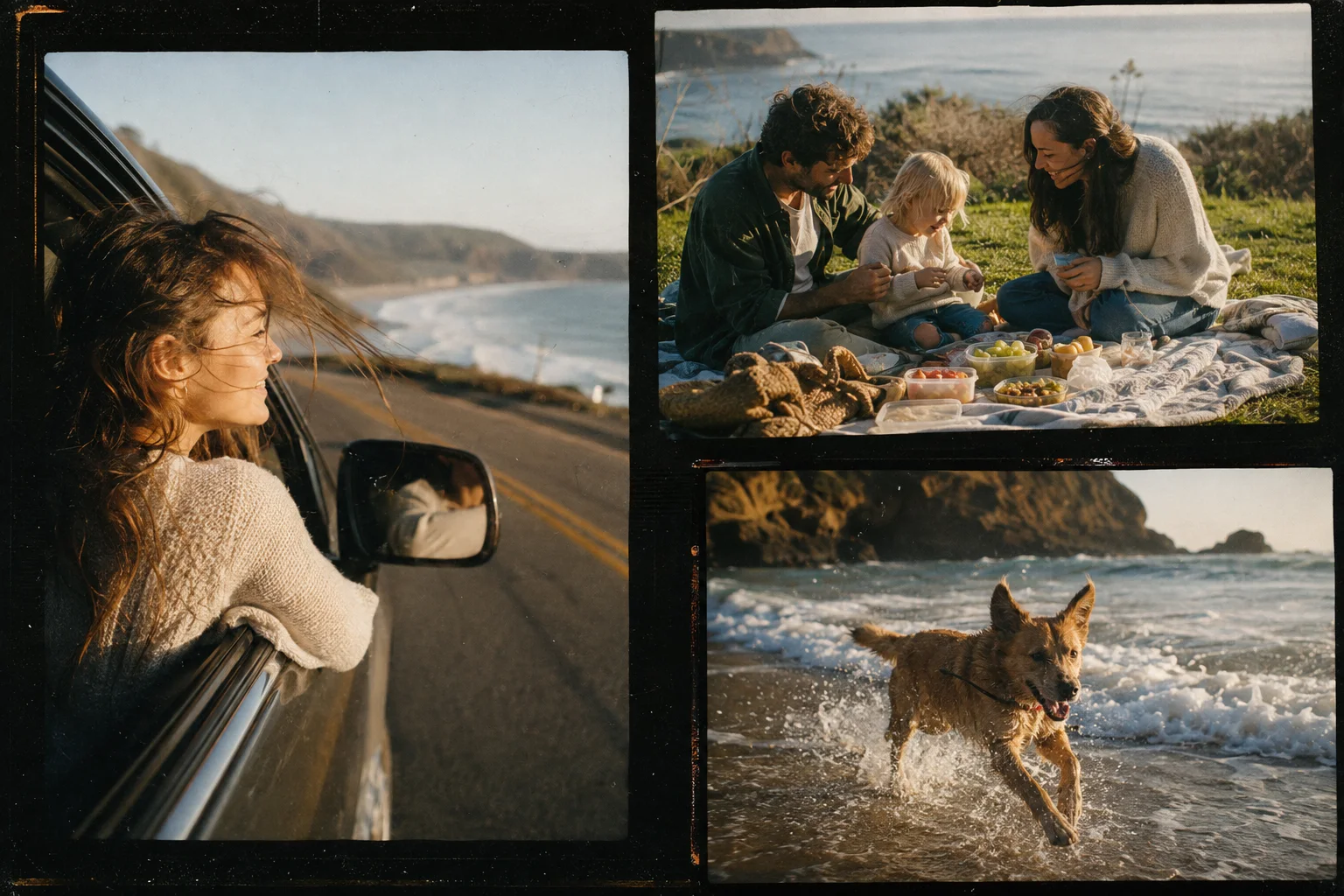
Sharpness tells us what something looked like. Blur can tell us how it felt. The useful question is not “is this perfect?” but “does this picture bring the moment back?”
Blur is evidence of movement
A dog running, somebody turning toward a laugh, a child crossing the frame—movement naturally refuses to hold still. A little blur keeps that energy inside the picture.
Keep the frame when the gesture is clear, even if the edges are not.
Look for emotional information
A technically weak photo can still contain a hand reaching in, the tilt of a head, a familiar room, or the precise light from that evening. Those details are often the part your memory needs.
- A recognizable gesture
- A meaningful setting
- A feeling that the sharper frames missed
Use imperfect photos as rhythm
In a moving story, every image does not need to be a hero. A quick, imperfect frame can act like a breath between two clearer photographs. Use it briefly, then let the next image land.